What am I paying for when I get a CPAP?
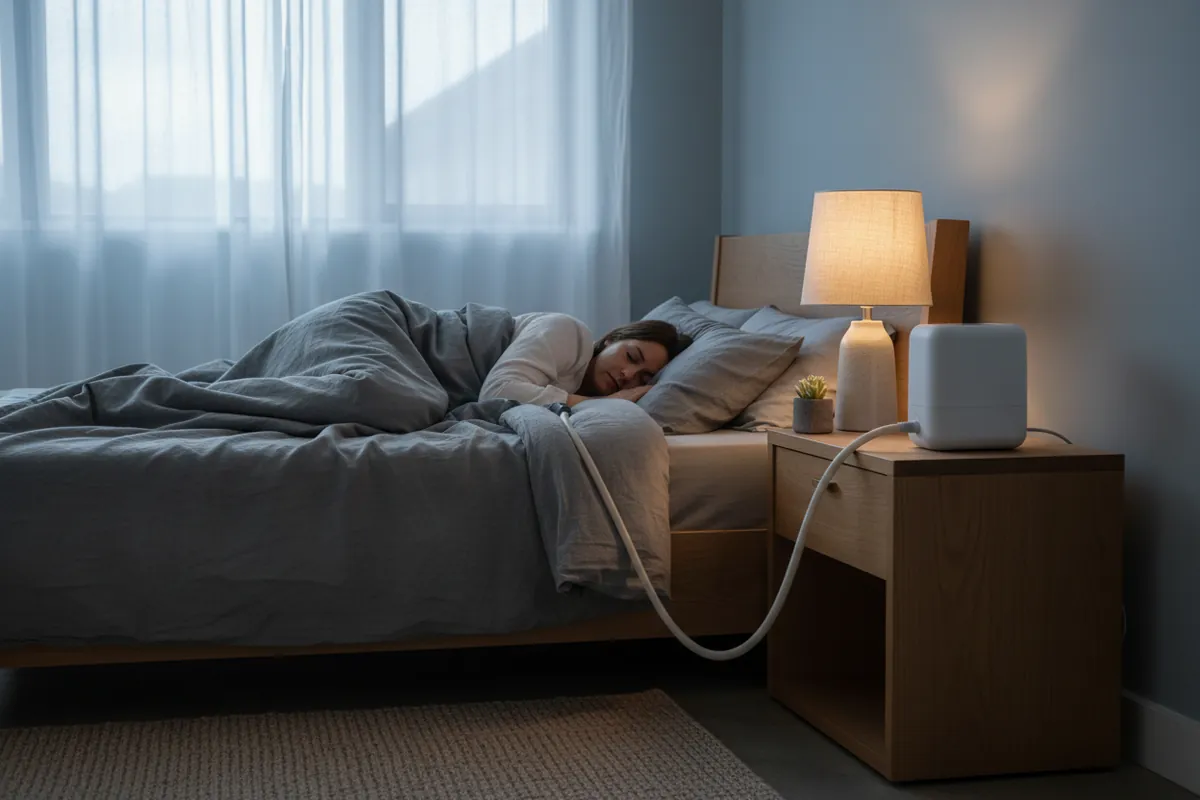
NHLBI, part of the National Institutes of Health, says a CPAP machine provides constant air pressure through your mouth and/or nose to keep your airways open and help you breathe during sleep. The machine is only one piece of the bill.
The machine
The blower on your nightstand. It can be billed as a monthly rental or a one-time purchase, so we show no single price. Ask the supplier which it is and what each month or the total costs.
Mask and tubing
The parts that touch you and carry the air. They wear out. Insurers pay $62 to $187 for a full face mask, $40 to $118 for a nasal mask and $8 to $39 for tubing.
The sleep study
The test that finds sleep apnea, a condition where breathing stops and starts during sleep. It is a separate bill that comes before the machine.
Ask the supplier for a list of everything that is included in the price you were quoted, and everything that is not.
Will I rent my CPAP or buy it?
With Medicare you rent first. medicare.gov says: Medicare pays the supplier to rent the machine, and after 13 continuous months of rental payments you own it. Private plans can rent or buy, so ask which one yours does and how many months of payments come first.
- If you rentYou pay a monthly amount. Ask what it covers and whether a month you do not use the machine still counts.
- If you buyYou pay once, or on a plan with the supplier. Ask what the warranty covers and who repairs it.
- Why it mattersTotal cost over a year depends on how many monthly payments your plan allows before the machine is yours.
What does Medicare want to see before it pays for a CPAP?
The rules are in two steps. medicare.gov says: "Medicare may cover a 12-week trial of CPAP therapy if you have been diagnosed with obstructive sleep apnea."
- The sleep study comes first.
A sleep study is the test that shows whether you have sleep apnea. NHLBI describes CPAP as a treatment for people whose sleep study shows it. The study is its own bill.
- The 12-week trial follows once you have the machine.
The trial is the first 12 weeks of using the CPAP.
- An in-person visit after the trial.
medicare.gov says: "Coverage can continue after the trial if you meet with your doctor or other health care provider in person, and they document that you meet certain conditions and the therapy is helping you." Ask your doctor when that visit should happen.
How much will the mask, tubing and refills cost me?
These are called supplies. medicare.gov says you pay 20% of the Medicare-approved amount for "the machine rental and related supplies like masks and tubing" after the Part B deductible.
A mask
Insurers pay $62 to $187 for a full face mask and $40 to $118 for a nasal mask, each.
Tubing
Insurers pay $8 to $39 for tubing.
Ask the supplier: "How often will my plan pay for a new mask and new tubing, and what do I pay each time?"
Why does the supplier matter so much?
medicare.gov says: "Medicare will only pay for DME items if you get them from suppliers who are enrolled in Medicare." DME means durable medical equipment, such as a CPAP. Assignment means the supplier agrees to take Medicare's approved amount as full payment. medicare.gov says: "If a supplier will not accept assignment, you may have to pay the full cost upfront and be paid back later for Medicare's share."
That makes one question worth asking before the machine arrives: "Do you accept assignment for every month of the rental?" Ask a private plan the matching question: "Is this supplier in my network?"
What if the CPAP does not suit me?
NHLBI lists these side effects: congestion, dry eyes or mouth, nosebleeds, or a runny nose. It also says: "If you have stomach discomfort or bloating, stop using the machine and contact your health care provider."
- Tell the supplier earlyAsk whether the supplier can swap the mask and what that costs on your plan.
- Tell your doctorA problem with pressure or comfort belongs to the doctor who prescribed the machine.
- Keep using it if you canFor Medicare, the 13 months of rental payments have to be continuous before you own the machine.
What do Aetna, Blue Cross, Cigna and UnitedHealthcare pay for a CPAP?
Each insurer agrees its own price with each supplier. For the parts you replace:
| Insurer | Full face mask | Nasal mask | Tubing |
|---|---|---|---|
| UnitedHealthcare | $64 to $111 | $42 to $76 | $9 to $26 |
| Aetna | $64 to $164 | $40 to $102 | $8 to $28 |
| Cigna | $81 to $135 | $51 to $85 | $10 to $29 |
| Blue Cross plans | $75 to $187 | $48 to $117 | $10 to $39 |
Each range is one insurer's prices across the states where it sells plans, from 9 insurer groups' price files in 54 states and territories, counting only suppliers that bill for these items. The machine is left out because it can be a rental or a purchase. A price here is what a plan pays, not a promise that yours does.
A CPAP machine without insurance
Pay-yourself prices come in two shapes: the machine alone, or a set that includes the mask and tubing. Compare the set. As a yardstick for the parts, insurers pay $62 to $187 for a full face mask and $8 to $39 for tubing.
- Ask for the total with the mask and tubing.
Ask what refills cost after the first set.
- Ask what a prescription is needed for.
Ask the supplier what paperwork it needs from your doctor.
- Ask for a good faith estimate.
A good faith estimate is a written price before your care. You have a right to one when you pay without insurance. How it works.
If you have Medicare
The Part B deductible is $283 in 2026. medicare.gov says: "After you meet the Part B deductible, you pay 20% of the Medicare-approved amount for the machine rental and related supplies like masks and tubing." If you have Medigap, Plan G pays your 20% share but not the Part B deductible.
Common questions
Does insurance cover the cost of a CPAP?
For Medicare, medicare.gov says: "Medicare may cover a 12-week trial of CPAP therapy if you have been diagnosed with obstructive sleep apnea." It adds: "Coverage can continue after the trial if you meet with your doctor or other health care provider in person, and they document that you meet certain conditions and the therapy is helping you." For a private plan, the rules are in your plan documents, so look for how it treats rented or bought machines, supplier networks and prior approval.
What is the purpose of a BiPAP machine?
A BiPAP is another type of positive airway pressure (PAP) machine. NHLBI says: "CPAP is the most common type of positive airway pressure (PAP) machine."
Why do so many people quit CPAP?
Side effects can be part of it. NHLBI lists congestion, dry eyes or mouth, nosebleeds, or a runny nose. It also says: "If you have stomach discomfort or bloating, stop using the machine and contact your health care provider."
Get your exact CPAP price
Equipment suppliers near you, on your insurance. About 30 seconds. Free. The price at each place comes with a quick email code.
Get my exact priceWhere these prices come from
Federal law requires insurers to publish the prices they agreed with the doctors, hospitals and other places in their network. The prices here come from the June 2026 files. The date on each page is the day its numbers were last checked.
Erin Rose, founder of CareCost. CareCost builds the price tools medical practices use to tell patients what they'll owe before treatment. This site puts the same insurer data in your hands.
Prices are estimates, not a quote or medical advice. Reviewed by Erin Rose, founder of CareCost, on November 11, 2026.
Also: Doctor visitDeductibleOut-of-pocket maximumGood faith estimate